Directory pages are some of the most useful pages a business can publish, and some of the hardest to get right for search. On zerocater.com we built and maintain a catering directory, led by zerocater.com/catering, that lets visitors browse more than 1,300 catering partners. Here is how we approach a directory that has to work for customers, search engines and AI assistants at the same time.

Start with what the visitor needs
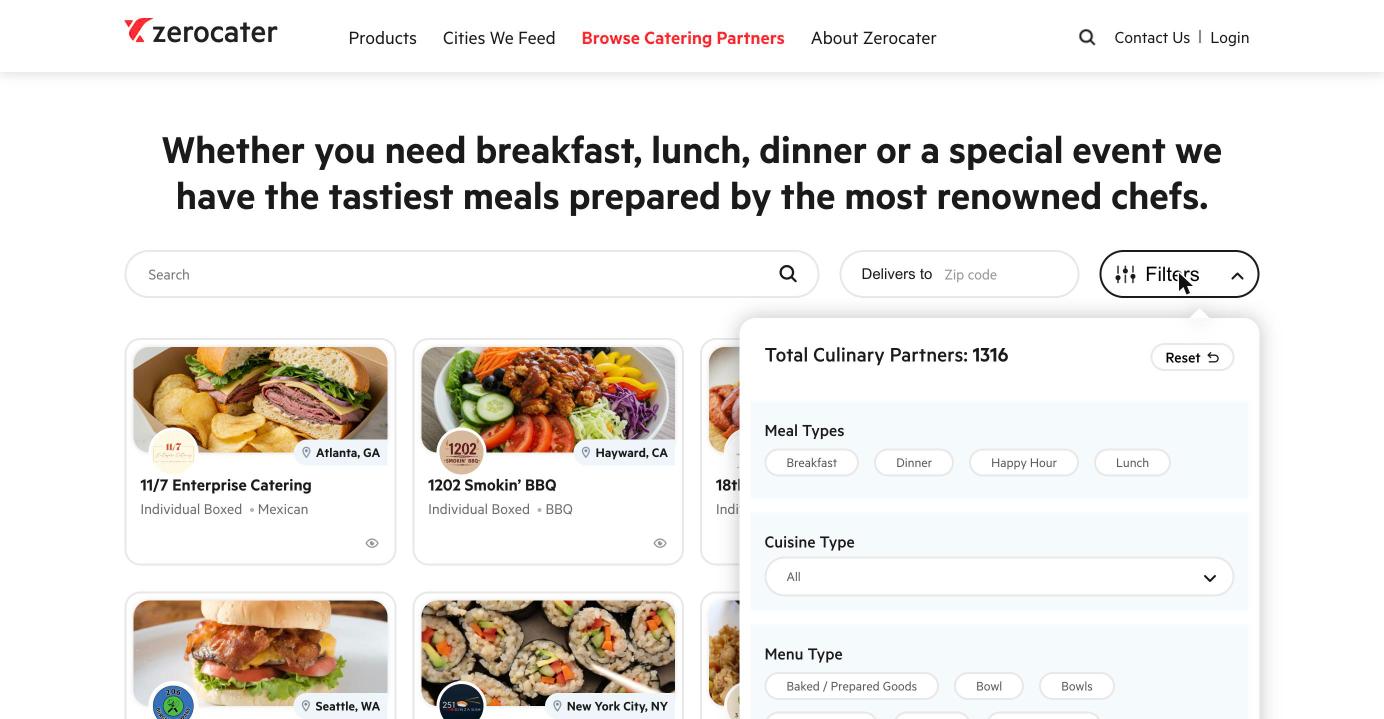
The directory has keyword search, a delivery ZIP check, pagination and custom filters for meal type, cuisine, menu type, category, headcount and per-person budget. Every page also carries CaterAi search and lead capture, so a visitor who finds a caterer they like can start a request right there. A directory that people actually use earns links and engagement, which search engines notice.
Keep the data fresh automatically
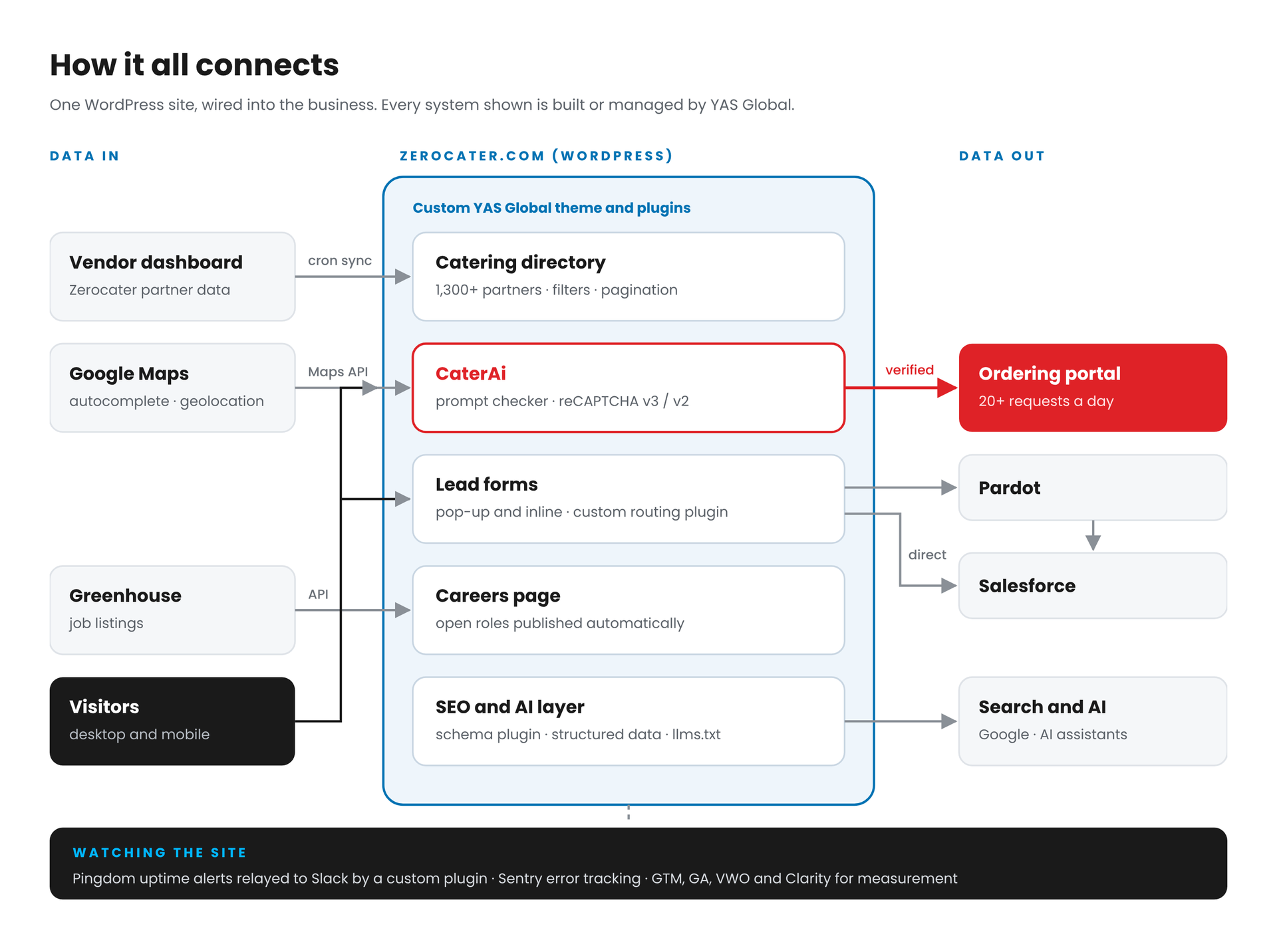
A directory goes stale fast when it is updated by hand. Partner data on zerocater.com is kept in sync with Zerocater’s internal vendor dashboard by scheduled cron jobs, so new partners, changed details and removed listings show up on the website without anyone editing pages. Fresh data matters to visitors, and it matters even more to AI assistants that quote what they find.

Describe every listing with structured data
Search engines and AI crawlers read structured data far more reliably than layout. A custom schema plugin we built adds structured data to the directory, so each partner is described in a machine-readable way rather than only as text in a card. This is the same principle whether the reader is Google or an AI model: say clearly what the page is about.
Add an llms.txt file
An llms.txt file gives AI models a plain, curated summary of what a site offers and where the important pages are. It is a small file, quick to add, and it gives you a say in how AI assistants understand your site instead of leaving it entirely to whatever they happen to crawl.
Treat it as an ongoing project
The directory has been live for months, and we keep refining it: improving the data, the filters and what search engines and AI crawlers can understand. That steady work is what turns a list of partners into a source people and AI assistants come back to.
A quick checklist
- Build for the visitor first: search, location checks and filters that match how people choose.
- Give every directory page a clear next step, like a request form.
- Sync data automatically from the system of record.
- Add structured data for each listing.
- Publish an llms.txt file.
- Keep improving it after launch.
Read the full Zerocater case study to see how the directory fits with CaterAi and the rest of the site. If your website has a directory that is not pulling its weight, get in touch.