
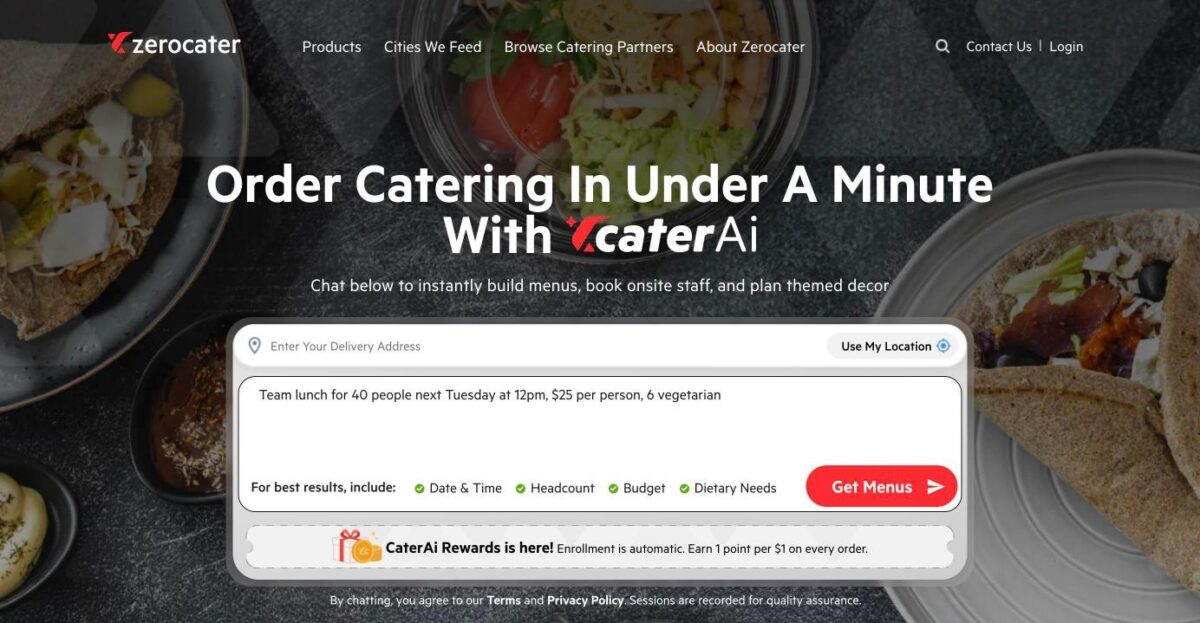
Most of the attention around AI ordering assistants goes to the model. In practice, a lot of whether one works comes down to the website around it: what the visitor types, what gets checked, and what gets handed off. We have built and run zerocater.com since 2016, including the website side of CaterAi, the AI ordering assistant on the homepage. Here is what we learned.
The website has one job: a good request, handed off cleanly
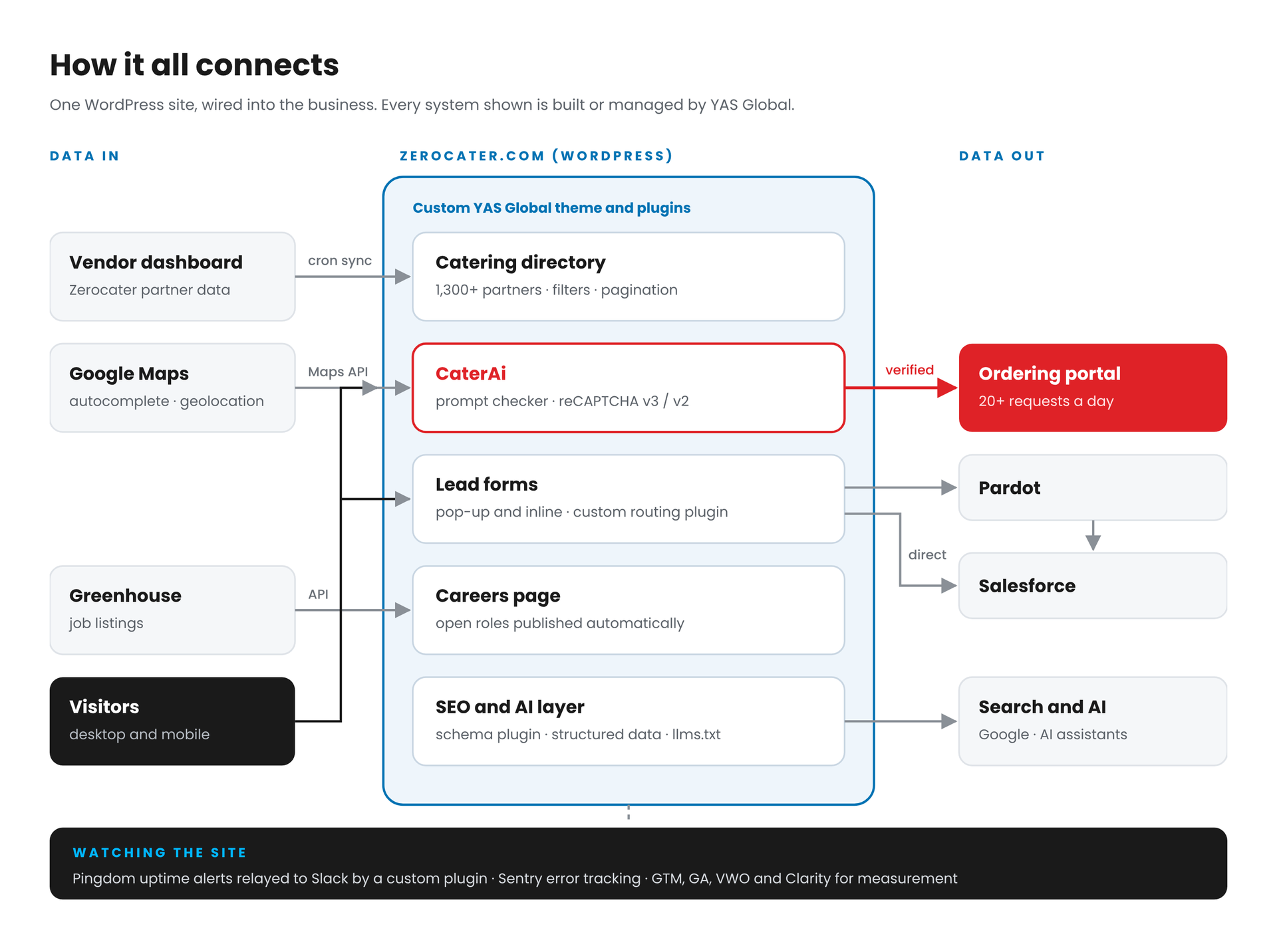
CaterAi lets office managers describe a catering order in plain language, then sends them into Zerocater’s ordering portal to pick menus. The website does not build the menus. Its job is to collect a request that is complete enough to be useful, make sure it came from a real person, and pass it along without making the visitor repeat themselves. Today more than 20 requests a day go from the website into the portal this way.
1. Coach the prompt while people type
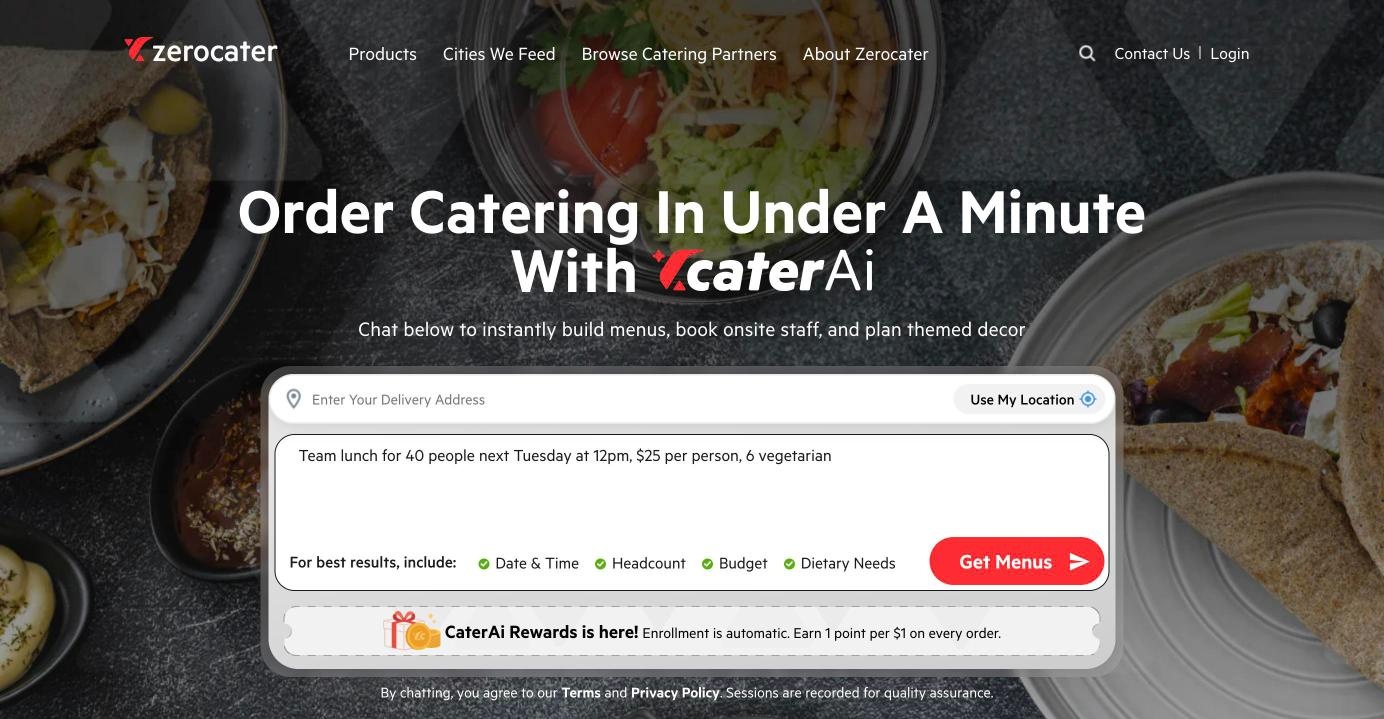
A free-text box invites vague requests like “lunch for the team”. So the form shows a live checker under the box with the details that matter: date and time, headcount, budget and dietary needs. Each one lights up as the visitor mentions it. People fill the gaps on their own because they can see what is missing, and nobody gets an error message for leaving something out.

2. Make the address the easy part
Delivery address is required, and it is the field most likely to be mistyped. We use Google Maps address autocomplete so people pick a real address instead of typing one, plus a “Use My Location” option. Location is only requested when the visitor clicks that button, never on page load, which keeps the browser permission prompt out of the way for everyone who does not need it.
3. Verify before you hand off
Any open form on a busy site attracts bots, and a bot request that lands in an ordering portal costs real people time. Every submission is checked with reCAPTCHA v3, which scores the visitor in the background, with a v2 challenge as a fallback when the score is unclear. Only verified requests are passed on.
4. Pass the context, not just the visitor
The handoff carries the address and the event details along with the visitor, so the portal can lead with the menus they are most likely to want instead of a blank search. This is the step that makes the experience feel connected. The visitor typed one sentence on the website and lands on relevant options in the portal.
5. Measure the handoff
Because CaterAi is now the most important feature on the site, the handoff is tracked like a conversion, with events in Google Tag Manager and Google Analytics. That is how we know the daily request volume and can see the effect of changes to the prompt hints or the form.
What to take from this
- Show people what a good request looks like while they type, instead of validating after they submit.
- Use autocomplete for anything that has to be exact, like addresses.
- Ask for location only when the visitor asks for it.
- Verify every submission before it reaches a person or another system.
- Carry context across the handoff so nobody has to repeat themselves.
- Track the handoff as a conversion from day one.
Want the full story, from the early site in 2016 to CaterAi and a catering directory of 1,300+ partners? Read the Zerocater case study. If you are planning something similar, talk to us.